Author name: cgeyy

Insights

Why it’s time to take an active approach to work safety

Now, more than ever, there’s mounting pressure on organisations of all kinds to take an active approach to managing their health and safety duties. It is certainly no longer possible for any business to ‘wing it’ or to ‘do it later’ when it comes to the safety of their people.


The global pandemic we are now living with won’t allow it.


For us, in the occupational health and safety (OHS, or also known as WHS) sector, we’re pleased to see the increased effort and focus businesses are taking when it comes to the health, safety and wellbeing of their workforce.


This is the kind of attention that we think protecting people from harm whilst they are at work has always deserved. 


The safety manager’s burden

Yet for the office managers, team leaders, OHS officers, safety team, business owners or anyone else trying to manage safety, work safety management is not always the easiest of ventures to wrangle. Often the people tasked with the duties of health and safety in a business aren’t always equipped with the best of resources to help them in this task.


Often we leave the ‘person’ responsible for safety with little more than spreadsheets, paper forms, email trails, and phone calls left unanswered. They need to fight for support and resources from management, and must constantly chase staff members for their input.


It can sometimes feel as though they are the only one who cares. Not only this, it can even unfairly place the burden of safety (or, the burden of safety gone wrong) on their single set of shoulders. This should never be allowed to happen.


Safety is a collective effort

It’s important to remember (or to learn if you don’t know) that everyone is in some part responsible for workplace health and safety. It cannot simply land on the shoulders of one person.


Everyone must play their role in keeping a workplace safe – for everyone else’s benefit.


This is too often forgotten. Leaders and managers often know they need to do something about work safety, so they task it to someone. This is fair – an OHS or WHS Professional is an expert in this kind of work. But what leaders and managers often forget is that they play a part too.


Safety must be encouraged and supported by leadership. This way, everyone in the team understands the importance and they will be motivated to get involved. They will understand it’s a collective effort.


Leadership in safety

It is imperative that senior management, leaders, business owners and any other duty holder are actively supporting a safety management program.


In fact, it is legislated that duty holders know what is happening and are taking active steps towards improve workplace health and safety.


What does this look like in practice? Here’s a few tips;


  • Keep safety management on the agenda – regularly talk about safety in team meetings (with all teams), feed results back to them, talk about priority areas in safety, and make sure everyone knows what role they play.

  • Make sure that the people who keep your safety program ticking along have appropriate resources to help them – like safety management software which allows them to plan the program, delegate important tasks, communicate vital safety related information effectively with workers, capture data, see trends, report back, and most importantly, improve things over time to reduce risk of harm to workers.

  • Check in with your safety management team on a regular basis. Review the reports they produce, discuss their challenges, and address what they need to protect your people. Make the time to do this, and you will vastly see things improve, whilst also actively upholding your legal duties.


Why now is the time for action

To be honest with you, it’s always been the time for action in safety. Because the physical and mental health of the people in your charge deserve to stay safe whilst they work. This is a fact. Everyone has a right to stay safe from harm at work.


But now presents itself as a good reminder to us all. We have see that the spread of the COVID-19 disease has often occurred in workplaces, as people come together to get on with their day job. So, it’s incredibly important that we all do something about this.


This is imperative not just so we comply with the law, but so we support the broader community around us.


Take an active approach to safety today by signing up to a 14 day trial of Safety Champion


So, if you haven’t already, it’s well and truly time for you to play your part. Not later, not next year, not when you have budget. Now.


Take action in safety today. A couple of ideas;


  • Make a meeting with your safety team or the people who do their best to keep it on track. Discuss how your safety management program is going and come up with a plan for improvement

  • Consider whether OHS professionals are needed – reach out to a consulting firm like actionohs.com.au if you need further assistance

  • Modernise your systems by getting safety management software in that will help you build a sustainable safety program. This doesn’t have to cost money – try our 100% free plan

  • Look at your data – what’s been happening in the past? Where are the places you can improve? If you don’t have any data to speak of, this is problem. Get started on tracking and documenting what is happening. Again, safety software can help.

  • Talk to the wider team. As we said before, everyone has a part to play. And this can mean that the people in your team will have good ideas for what is needed to improve WHS at your work. Listen to them and take note.

  • Don’t make the error of thinking that you have to work in a physical workplace to think about safety. Your responsibilities to protect the health and safety of your people are there whether you are working in a ‘workplace’ together, or all online working from home, or spread all over the world. Plus, don’t forget that this is not just about physical risks – think about mental health as well.

The list could go on – but this is good start.


To end, we wanted to say that it’s almost impossible to find a silver lining with such a terrible global pandemic. But here’s one to consider. The pandemic has brought attention to the great importance of keeping everyone safe and free from harm – at work or anywhere. Now is the time to work together to actively keep each other safe.


Trending

Our journey towards B Corp Certification

This week, we started our B Corp Certification Journey.


We sat down to complete the B Corp Impact Assessment tool to see how Safety Champion stacks up as a socially and environmentally responsible business. And, wow, what a process it was.


Not exactly easy or fast – the assessment really makes you see just how much we could all be doing in our workplaces to support the social and environmental health of business in general.


Now, you may be reading this wondering what a B Corp Certification is. If so, a brief description for you;


A B Corp Certification is a certification awarded to a business that meets and upholds the highest standards of social and environmental performance, public transparency, and legal accountability.


In other words, it’s for-profit business that pledges to balance profit and purpose, measuring and improving its impact on its workers and customers, and the community and environment around it.


Businesses you know that are already B Corps

Some fantastic, purpose-driven businesses are Certified B Corporations. Kathmandu, KeepCup, CultureAmp – to name a few.


It’s great to see so many Australian-based businesses like us finding their way into the list as well – including a few of our very own Safety Champion customers like T2!


\"certified


Our purpose-driven work in health and safety

Now for us, as a health and safety company, we were feeling pretty confident as we set out to complete the assessment. We already feel like we have really clear purpose and make a positive contribution towards the wellness of others.


After all, it’s why we work in this industry in the first place. It’s in our DNA to support the businesses we work with, and each other, to be healthier and safer at work.


Plus, ethics plays a big role in our work as consultants. As Professional Members of the Australian Institute of Health and Safety we are duty borne to hold ourselves and our practices against the requirements of the Code of Ethics.


This places obligations on us to practice and work in an objective manner; follow recognised OHS principles as specified in the relevant federal or state/territory legislation; and realise the lives, health and welfare of individuals may be dependent upon our judgement.


Yet, was it enough?

As it turns out, we had to demonstrate more. To become a B Corp Certified business, it isn’t quite enough to simply work in an industry that already has social purpose.


What were we doing that was over and above? And what were we doing to really encourage positive change for our team members, our customers and elsewhere… that is, beyond our core service offering.


The impact assessment asked us about things like;

  • results from our employee engagement surveys,
  • how we give back to the community around us,
  • what environmental targets we have in place – and how we track them,
  • how transparent we are with financial information,
  • our policies and procedures,
  • and more. Yes – it’s a lot.


Established initiatives but more to go…

Thankfully, we found we were well on our well and scoring points in many places beyond our work in health, safety and wellbeing.

Based on the efforts we’ve gone to over the past year or so to establish more meaning, purpose and drive in our business, we had already set in place many of initiatives that help demonstrate we are a business that cares about people, planet, and profit.


A few of the areas that put us in good stead for certification;

  • We offer a 20% discount for non-profits listed on the Australian Charities and Not-for-profits Commission, so that they can utilise more of their funds on their purpose and cause

  • We developed a free safety software plan so that those in our community without the financial means can still access a fantastic tool to help keep their workers safer from harm at work

  • We regularly provide publicly available resources and advice to guide people towards success in safety – including monthly webinars, blogs, and guidance documents.

  • We’ve worked pretty hard establishing a clear mission, vision and values under which we work – along with supporting documents. We have documented Operational Manuals to provide clarity and transparency on our internal processes.


Whilst we haven’t yet submitted our formal application to become a B Corp yet, the results of the impact assessment let us know we’re in a good place to continue to this next step.*


Yes, we have some areas to work on to improve things here and there, but it wouldn’t be a strong certification without it.


*Correction Nov 2020: We’ve lodged our application!


Learn more about Certified B Corporations here: https://www.bcorporation.com.au/

Insights

Your Duty of Care When It Comes To The Safety of Your Contractors

Engaging contractors is an everyday part of business for many organisations. In some sectors – like retail, manufacturing, or construction for example – contractors can make up the larger portion of a workforce.


As such, it is important that people managers, HR teams or business owners are aware of their legal duties when it comes to contractors.


Who or what is a contractor?

At its simplest a contractor is a person who performs work under a service of contract for a set fee. The business engaging the contractor does not pay wages or superannuation or provide other benefits such as leave entitlements to the contractor.


Contractors will typically:

  • work at their own initiative to achieve a stated result as agreed with by the business that engages them.
  • be free to provide services to multiple clients.
  • have the option (often in agreement with the business that engages them) to delegate all, or some, tasks to another person – this is commonly referred to as sub-contracting.
  • be responsible for rectifying poor work at their own cost and effort.
  • provide their own tools and equipment to complete the agreed service.


In many respects, contractors retain a certain degree of independence from the business that engages them. Yet the extent to which this independence extends to workplace health and safety duties is worth a closer look.


If you need some help determining whether one of your workers is an employee or a contractor, take a look at the ATO Employee/Contractor Decision Tool for guidance.


Common misconceptions from businesses when it comes to contractors…

Many businesses misunderstand whether they have a duty of care towards the contractors they engage.


The health and safety legislation places a duty of care on businesses to provide a safe workplace for all workers and other persons in a workplace under its control. In addition, the legislation states that those “workers” extend past your employees. The legislation states that workers include anyone who carries out work for the business.


This means a worker can be an employee; a contractor or subcontractor, of the employee of a contractor or subcontractor; an employee of a labour hire company who works in the business; or an apprentice, trainee; work experience student; or a volunteer. It’s a long list!


At the same time the legislation clearly states that contractors have a duty of care towards their own employees and to everyone else at a workplace where they are working.


So, where and with whom does the buck stop?


The short answer to this question is – both. Both the business engaging the contractor, and the contractor itself have safety responsibilities. But how does this work in practice?


Take a 14-day trial to see how you can better manage contractors


How does this work in the real world?


Yes – it can be tricky to determine. Clear information about the scope of this responsibility can be hard to come by.


The business engaging the contractor is best to remember that it’s health and safety responsibility extends to contractors that they engage.


Irrespective of what practices the contractors have in place, the business engaging the contractor should keep in mind that it has a responsibility to maintain a safe and healthy working environment for everyone in your workplace, or impacted by your workplace operations. This is for everyone – your permanent staff, your freelancers, contractors, and even the people who come to visit.


Recent legal decisions confirm that contractors are responsible for understanding how to conduct their work safely, for which they have been engaged to undertake. This means that you don’t need to be an expert of their domain or stand next to them as they complete the job you have engaged them to do.


What practical measures can you take to ensure of a safe working environment for contractors?


As an employer it is expected that the following is done when engaging a contractor:

  • Clearly define the tasks a contractor is being engaged to undertake.
  • Determine if the contractor’s work is expert work over which the principal has little knowledge or control.
  • Identify how the contractor’s expertise will be confirmed e.g. evidence of licensing, accreditation.
  • Clearly assign responsibilities for expert work and risk management in contracts. Identify hazards associated with elements of the work controlled by the principal (employer) and implement risk controls for all persons including contractors.


When working with contractors it is useful to:

  • Induct them onto all worksites under the control of the business that has engaged them, and ensure they have access adequate first aid and emergency response equipment and procedures
  • Confirm that they have documented evidence that they are able to carry out their work safely
  • Request that they report all workplace related incidents and/or injuries as soon as practicable after they occur
  • Manage all contractors who breach safety rules (don’t instruct them how to work safely as this may result in exposure to increased risk).
  • Ensure that their insurance and licenses/qualifications remain current.


Using WHS software to help…

Safety software is a great way to help manage your duty of care when it comes to the safety of your contractors. You can use software to ensure that you have everything in place for a successful engagement with your contractors.


\"\"


Safety Champion allows you to enter and manage all relevant details about your contractor in one central platform.


  1. Recurring safety tasks can be created and linked to the specific contractor. Examples of these may include (but not be limited to): internal audits, equipment checks (say tests tag) and Regular safety monitoring meetings.
  2. Contractors Insurances, Qualifications and Licenses can be managed using the Contractor and the Insurance Modules. Contractor details can be entered in the Contractor Module and their insurances and qualifications can be entered into the Insurance Module. Entries can then be linked for the Contractor to create recurring tasks specific for that Contractor.
  3. Contractor inductions can be managed.
  4. Contractor documentation and correspondence can be saved and monitored so you are ready when expiration dates are coming up.
  5. Contractor related reported incidents can be managed through the incident module – the Incident Module allows incidents to be reported and saved reports can be saved along with evidence relevant to that incident.
  6. Contractor Audits can be scheduled and completed on time.


Using Safety Champion effectively means that you can be assured that:

  • All information related to contractors engaged – like insurances and licenses – is up to date;
  • All incidents relating to contractor safely are being managed with real-time notification, and;
  • All correspondence relating to a contractor is in a centralised location.


Learn more about our features and modules today.

Insights

Managing Summer Based Hazards

Summer is here in the southern hemisphere! As such, organisations in which workers work outdoors or inside factories or sheds, should now be considering how they plan to manage the following when working outdoors this summer:

  • Heat Stress

  • Hydration

  • Ultra-Violet (UV) Radiation


What is Heat Stress?

Heat stress occurs when the body cannot sufficiently cool itself. Factors that contribute to heat stress in summer may include ambient temperature, humidity, air-movement, radiant heat, inappropriate clothing, and physical exertion.


Signs and symptoms of heat illness include feeling sick, nauseous, dizzy or weak. Workers who experience heat illness may also feel clumsy, collapse or experience convulsions. If symptoms occur, workers should immediately seek first-aid or medical assistance, rest in a cool and well-ventilated area, and drink cool fluids.


Workplace health and safety laws require the working environment, so far as is reasonably practicable, to be safe and without risks to health and safety. This includes illness from working in heat. Please note that whilst articulated in this article, heat stress can occur all year round in work environments where hot work takes place.


Ways to Prevent Heat Stress

Heat stress can be minimised through the consideration and if possible, implementation of several controls. These include:


  • Rescheduling tasks to ensure that tasks with a greater physical requirement are performed during the cooler parts of the day.

  • Identifying methods to rotate between hot jobs or arranging/skilling more workers to share the job.

  • Identifying, then procuring, mechanical aids (or plant) that may reduce physical exertion, or eliminate the requirement to work in the heat.

  • Wearing light and loose-fitting clothing (preferably cotton) that provides adequate sun protection. Outdoor workers should be provided with PPE against UV radiation, such as wide brim hat, loose fitting, long-sleeved collared shirt and long pants, sunglasses and sunscreen.

  • Providing fans or installing air conditioners or coolers to reduce air temperature and generate/increase air movement. Increased air movement will support evaporative cooling.

  • Installing shade cloth, blinds or similar to reduce the radiant heat from the sun.

  • Establishing defined rest and hydration breaks.

  • Providing workers with information, instruction and training on heat- illness and on first aid.


Don’t Forget about Simple Hydration!

Providing cool drinking water near the work site should limit symptoms of heat stress.


During hot weather, workers should be encouraged to drink a cup of water (about 200 mL) every 20 minutes. The need for water intake may also be determined by the worker by the colour of their urine.


Thought about safety software. Try our free plan!


Refresh your Memory on UV Radiation

UV Radiation is a known cause of cancer and can have several harmful effects on the skin.


Sun protection is required whenever the UV Index is 3 or higher, or when you are outside for long periods near highly reflective surfaces, e.g. snow or water.


The UV index describes the strength of the suns UV Radiation. The higher the number, the stronger the solar UV Radiation and the faster unprotected skin will be damaged.


If you work outside frequently, you should always use protective clothing including hats, sunglasses and sunscreen regardless of the UV Index. If you work outside occasionally, then you should use protection when the UV is 3 and above. A UV forecast for many locations is available from www.MyUV.com.au


A common misconception is that the temperature is directly related to the strength of the UV radiation. This is not the case. The takeaway? Don’t just wait for the hot day to protect your skin. The suns UV Radiation can still damage your skin in winter, autumn or spring.


For more on some of these topics, see our blogs on ways to avoid heat stress or about what kind of SPF rating you should be considering for your workers or even a little more info about hydration. Plus you might find our blog about Everything you need to know about Personal Protective Equipment a useful read.
Insights

Why keeping safety documentation up-to-date and accessible is a must

There are a number of benefits to keeping strong workplace safety documentation in place as a business. Not only does safety documentation ensure that you can demonstrate compliance with health and safety legislation, it can also save you and your team a great deal of time and frustration.


A key challenge facing business owners and managers


There is one main problem facing many organisations when it comes to safety documentation. It is challenging for businesses to keep track of documents as the business grows and evolves, or as staff change over time.


Documentation might be stored in different locations at different points in time. A variety of hard and soft copies of documentation might be in circulation at any one given time, current or older version. Regular reviews and updates of documents might fall off the radar. And communication of updated versions might fail to flow downstream to the staff that need the information the most.


All of this means that when it comes time to access or review such documentation, the business spends more time trying to figure out the state of things, and less actually working on improvements to documentation and systems for the sake of everyone’s health and safety! And no one wants that.


Should a serious incident or injury occur, you will be required to provide evidence to a safety regulator that you have effective health and safety workplace systems in place. At this point, your ability to supply documentation becomes very important. It can show that you comply with relevant safety legislation, and that you are actively doing what you can to make things safer for your people.


Needless to say, copies of documents, stored in a folder, in head office, on that dusty shelf, that no one ever really uses anymore, isn’t doing anyone any favours. This is especially true if you are working across multiple sites. If you have documentation, you need to make sure its current, accessible, and digestible.


Make documentation easy to access for your workers


So, we know that simply having documentation is not enough. People must first know it exists and be able to use it!


Regardless of the type and extent of health and safety documentation that you have available in your workplace, keeping it readily accessible to your workers is of paramount importance. If your workforce or any other interested party can’t access the documentation, no one wins.


On the other hand, if people can, and do, access relevant and current safety documentation this supports your legislative compliance. Additionally, easy access to documentation for workers, supervisors and managers will improve workplace efficiency.


When you roll out standardised and consistent training on the relevant workplace safety procedures, your ability to streamline and tighten your operations and output improves. So not only should you think about making the documentation accessible, but also think about how you communicate it. Training sessions, team meetings, or a quick stand up meeting at the beginning of every month.


Learn what’s included in our 100% free software plan


A best practice approach to WHS documentation management


Consistent with Australian and International Standards, best practice for managing safety documentation is with version control and periodic reviews. Documentation should be established with a revision period in mind (e.g. two or three times yearly) and should be marked with dates or version numbers for tracking purposes and ease of administration.


It’s important to remember that whilst periodic reviews should occur on a regular basis appropriate to your needs, they should also occur when major changes occur in your organisation. Such changes might be new business operations, unexpected periods of growth, shifts in staffing or job functions, or changes in management.


During such periods of change, safety considerations are commonly forgotten. But when big changes occur in your business, it is more than likely there will be flow on effects to your safety management system.


It’s at times like these that workplace health and safety should always be on the agenda. Current systems, processes, and documentation must be reviewed to ensure that safety stays on track and in accordance with your goals and legislative duties.


Finally, it is a good practice to ensure that safety documentation is stored in a safe and secure manner to prevent modification without organisational-level visibility. This speaks to the legislative duty that any business owner or person in charge must be aware of safety practices in their organisation.


Secure online storage for easy access and history of evidence


A secure, easy-to-use solution for better safety documentation management is utilising the Documents Module in Safety Champion Software. This module enables any organisation to easily upload, review and update their safety documentation. Plus it makes documentation super easy to access.


You can set up a revision period and keep version control, under control by saving new versions of documentation and archiving old versions. Email reminders will let you know when your documents are up for review. This is incredibly useful when it comes to health and safety legislative compliance.


Furthermore, this module allows different documentation types to be shared with specific groups in your organisation, or with everyone. You can ensure that safety documents are shared with users based on their level of seniority in the business, their job role or their function.


Plus, being a cloud-based software, your team can access these important documents from any location or work site, via any electronic device including a laptop, tablet or smart phone device. This means that when your team needs the information, they can get it. No need to slow down productivity, and no need to wait for HR to get back to their desk.


Read more about our Documents Module


But possibly one of the best features of Safety Champion – and one you won’t find in alternative software products on the market – is the fact that Safety Champion assigns safety tasks to a team or a group in your organisation and not to a person. This means, that if the person responsible for a safety tasks moves to another role or leaves the business, your safety tasks keep ticking along.


The system architecture keeps everything in place for you so that you never need to worry about safety tasks – like reviewing documentation – being forgotten again.


Get the OHS information you need any time, anywhere.


Total peace of mind with Safety Champion


Safety Champion’s Documents Module allows any business owner, people manager, team leader or human resources representative the peace of mind they are after.


Imagine being able to update that document, load it into the system, and feel confident knowing that your team, wherever they are – a suburb away on site, interstate, or even in another country – have most up-to-date and accurate safety information possible.


Safety Champion really is the easy and efficient way to manage safety documentation.


If you are keen to learn more, reach out to us and one of our customer experience team members will be in touch soon.


Trending

How To Be A Safety Champion

The word champion can be one of the most powerful words in the modern era.


(No wonder we named our awesome and very powerful safety software after it!)


We hear it repeated often and, in many contexts – like sport, business and politics – and across many forms of media and advertising.


So popular is this word that the noun has become the verb – we ‘champion’ specific causes!


The Cambridge Dictionary defines a champion as “a person who enthusiastically supports, defends, or fights for a person, belief, right, or principle”.


But what does it take to be a champion? More specifically, what are the qualities of being a champion that us ‘Ordinary Joes’ can apply on an everyday basis to make workplaces safer?


There are many quotes which have been uttered by sports persons, businessmen and politicians about what it takes to be a champion.


Perhaps these can best be summarised by the ‘championship qualities’ defined by sports journalist, best-selling author and business coach Don Yaeger.


A champion in the eyes of business coach Don Yaegar

Don developed his list based on interactions with sports and business champions over 15 years as a sports journalist and business coach.


  • Having contagious enthusiasm

  • Always being prepared, even in ‘off-season’

  • Visualising victory

  • Using adversity as fuel

  • Acting and reacting with careful consideration

  • Knowing how to adjust their game plan, quickly, when the unexpected occurs

  • Being willing to take on whatever role is necessary for the team to win


Don calls a person a champion when they know what needs to be done, and when they do what needs to be done, no matter how seemingly beneath him or her it might be.


In essence, a safety champion ‘walks the walk’, knows the power of networking, is always prepared, and never gives up.


A champion for workplace safety


We often talk about safety champions when it comes to health and safety. It’s a common phrase. So common, it’s the theme of National Safe Work Month 2019.


And we all have a sense of who those people are. They are the ones that really go all out with OHS to make sure we are all safe at work.


Need a safety software? Try our 100% free plan


They are the ones chasing up the tasks, making sure we are all reporting what we need to, putting up the signs around the office, and generally showing their support for workplace safety so we all go home safe at the end of the day.


But how can you be a workplace health and safety champion? Well, from a consultant point of view, we’d suggest you adopt a few or all of these principles and bring them into your business as usual.


  • Apply quality principals ie having a prevention focus with a continuous improvement approach.
  • Be an exemplar in working safely – always being on ‘display’, even when no one is watching.
  • Show respect for others in calling out and responding appropriately to unsafe behaviours. Knowing why the behaviour is unsafe will make this easier.
  • Ensure you provide or have access to safety knowledge with regards to risk management which is evidence based. The safety conversation will be easier if evidence for the proposed course of action is presented.
  • Be a good communicator! Communication (a key part of consultation) forms a cornerstone of modern safety legislation. To communicate effectively takes considerable skill. Coming up with new and interesting ways to present the ‘same old’ message is challenging.
  • Always being enthusiastic in all matters relating to safety. Enthusiasm for safety is a major contributor to effective communication.
  • Be aware as to where safety fits in with the big picture without compromising vision and belief.
  • Believe in the importance of eliminating workplace harm while acknowledging that zero harm may be unrealistic (the ‘higher power’?) and being able to visualise what a safe workplace looks like.
  • Acknowledge that emergent conditions can quickly escalate risk and prepared for and able to respond to all eventualities.


4 simple points to follow

Ok, ok. Maybe that was all a little too much. But don’t despair! Generally, being a safety champion in the workplace can be as simple as being actively engaged in your safety program.

But we have four neat points that anyone – no matter their position in the workplace – can take on board for a great safety culture.


  1. Ensure that you and your team have all the tools and skills needed to work safely.

  2. Report unsafe work situations or workplace incidents even if you are not directly involved.

  3. Walk the ‘safety’ walk. Follow the rules just as you’d expect everyone else to.

  4. Participate actively in relevant discussion and action to improve safety at work.

Try sharing these ideas with your team. These can be gold when it comes to building a stronger safety culture at your work.


If everyone in the workplace strives to follow these four simple principles above, it will be far more likely that safety will improve. Plus, if bring in some professional safety consultants to guide your safety program and a WHS software tool like Safety Champion, you will be well on your way to keeping everyone at work safer and healthier.


Of course, an entire workplace of safety champions is even better than one! Go for gold on that and get everyone on board!

Insights

Launching the first 100% free safety software plan of its kind

*GO FREE plan is now known as Safety Champion Light.


Today, we are thrilled, excited, and maybe a little nervous too, to launch our big news. Safety Champion now has the first 100% free, comprehensive safety software product on the market.


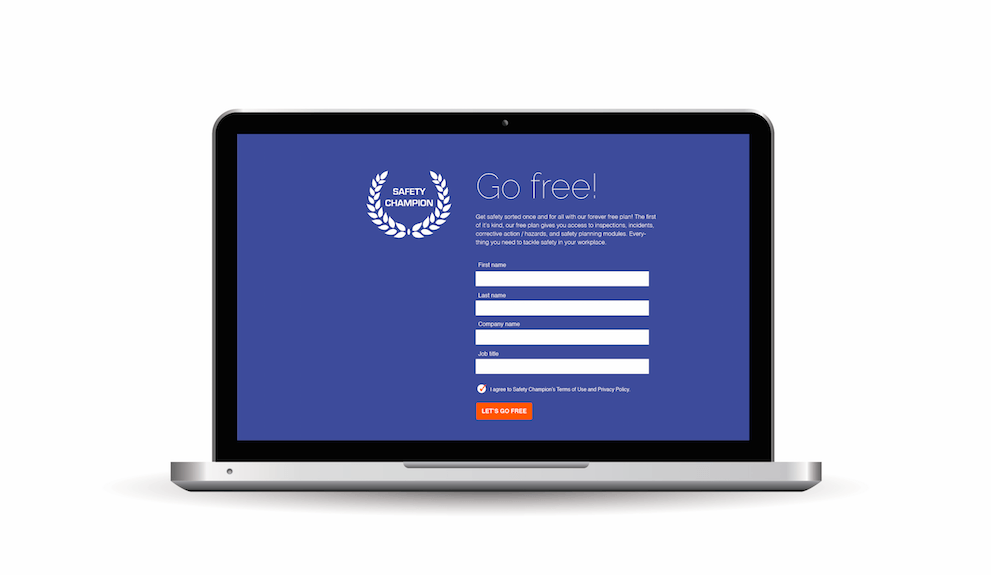
Our GO FREE plan allows anyone, in any organisation, to access our platform to manage their health and safety management system free. We don’t ask for credit cards and this is not a free trial period that will end in a month. It’s free, forever.


A free safety solution to break through the barriers

In our line of work, we see many organisations – small and large – struggle getting the resources or finances together to manage safety well.


It’s not that the people in these organisations don’t want to keep the people in their team safe from harm. Quite the opposite.


It’s just that health and safety has a perception of being complex and just ‘too hard’. This often acts as a barrier that prevents organisations from better engagement with stronger safety practices. And we see this as a real shame.


So, with our free workplace safety software, any organisation wishing to boost their safety management practices can do so. Without concern over having the resources or the money to put behind it.


Go right ahead and sign up today


Choose to go free, to free yourself up some time

In fact, the system saves you time. No more messy spreadsheets. No more chasing people up to complete that incident form. No more paper-based filing. And no need for that catastrophe meeting you have when you realise safety has dropped off the radar completely!


Safety Champion’s GO FREE plan frees you up to get to other important things in your business.


Through the system, you will be able to;


  • seamlessly manage the essential components of your safety program.

  • report incidents, report hazards, and complete inspections on your phone or computer.

  • plan out recurring tasks, set notification emails, and assign tasks to your team.


\"safety

The clean and clear interface of Safety Champion’s GO FREE version.


The first of its kind

Following on from other ‘greats’ in the SaaS (Software as a Service) industry – like Dropbox and MailChimp – we thought it was time to bring a free software product to the health and safety industry.


This free plan allows you access to more than one module – in fact many! – with more than one user. So you can manage all of the essential components of your full health and safety program in one system.


We think a free ohs software solution is just what the industry needs to get safety on the agenda in more workplaces, and improve uptake of strong safety practices.


Learn what’s included in our free plan


Be a Safety Champion this National Safe Work Month

We are incredibly proud to have launched this product – especially in Safe Work Month – when “Be a Safety Champion” is the tagline. Imagine our surprise when we learned about that tagline whilst preparing to launch this offer!


Now, everyone has the means to be a safety champion in their workplace.


What’s included then?

  • 4 awesome modules – incident, action, inspections, planning!

  • 2 unique user accounts

  • Access to our IOS and Android Apps

  • Templates to copy

  • Great guidance from our online tutorials


It’s pretty clear to see the benefits. So, sign up today!

Insights

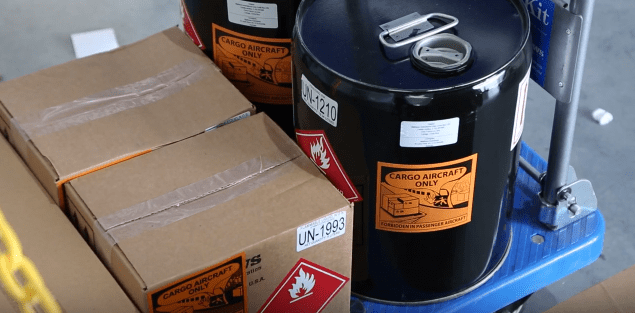
How to safely manage hazardous chemicals in your workplace

Bad luck or bad planning?

It’s often easier to figure out what happened and why after a chemical incident has occurred. A couple of seemingly unrelated events combine to produce an explosion, a chemical spill and/or worse case an injury.


You think –

“If only the regular operator had not been sick that day”
“If only the waste oil drum had been emptied on Monday when it was scheduled”
“If only the new operator had used the correct Personal Protective Equipment (PPE)”


Then, this incident would not have happened.


But, can you fight bad luck with good planning? The simple answer is yes!


So, what does this look like?

I hear you say –

“I have a chemical register, current Safety Data Sheets (SDS), suitable PPE and have assigned a person to manage the chemicals at our workplace”.
“I have also provided training to employees”
“So what more can I do?” 


Yes, you have the right information, but have you applied it in an effective way?


Is your chemical management system active or redundant?

Assigning the administration of the chemical management system to an employee and knowing what chemical products you have is actually not quite enough. 


You also need visibility of the ingredients of those products. Along with the specific hazards associated with the use, handling, storage and transportation so that you can identify and assess the risks and how these can be effectively managed.


Too often, information on chemical hazards is known only to a few employees and SDS folders and registers are left sitting on a shelf, forgotten and gathering dust. Managing hazardous chemicals involves everyone in your business – No observers allowed!

Elaine McGuigan – OHS Consultant


So, you have a safety program in place but you must remember that this is not the same as making sure your employees understand and can adequately handle the risks associated with hazardous chemicals in your workplace.


Is it enough to make sure a few employees understand the risks of hazardous chemicals?

No, the risks must be understood and communicated to all employees in a way that they can understand. Train your employees thoroughly and tailor the training to their level of education, it may take extra time to present in this manner, but they will remember it.


What’s some quick advice for consideration?

Information and awareness of the dangers of hazardous chemicals is the key to good planning. 

For example –

  • Have you undertaken a hazard analysis and taken the time to write down the risks associated with the use, handling, storage and transportation of your chemicals?
  • Have you taken into account your entire operation, the equipment you use, the workers who interact with these and how they all interact with each other? 
  • Have you considered the worst incident that can happen and how likely is it to happen?


Go beyond listing the dangers of each individual chemical and look at the hazards and risks from a whole of business perspective. Consider your neighbours, the community, the environment, your emergency plan and how you manage the introduction of new chemicals into your workplace.


A good chemical management system makes it impossible to overlook the way these things are interrelated because it requires input from your entire operation.


Learn from your mistakes following an incident where no real harm has been done. Rather than ignoring it and getting on with the job, investigate the direct and indirect causes (i.e. the contributing factors) and implement corrective actions to prevent the same thing from happening again.


How does safety software allow you to manage chemicals better?

Resources to effectively manage safety programs – including hazardous chemical management – are often stretched to the maximum. This is where safety software such as Safety Champion can help. 


Safety Champion has a dedicated Chemical Management Module which can make a big difference. The Chemical Module can;

  • be used to track multiple hazardous chemicals, across multiple workplaces
  • provide employees with immediate access to up-to-date SDSs
  • be access from any desktop, tablet or smartphone – even through our safety app!


Yes, there is still work to do but in using a safety software to help manage your chemical management program it is active, and no longer redundant. It now belongs to the workplace and not an individual. Phew. It’s no longer gathering dust on some forgotten shelf. 


Insights

Is Workaholism A Real Thing?

Have you ever called someone else or perhaps yourself a workaholic? Well despite it often talked about in a jovial manner, workaholism is actually a real thing. Sometimes considered by psychology and sociology academics as a behaviour-based addiction or compulsion, it is something that has been found to afflict pretty high portions of some populations, especially in western culture.
You might be surprised to hear that there’s even such a thing as Workaholics Anonymous for those who need help, akin to Alcoholics Anonymous or AA.

Workaholism occurs when someone is driven or motivated to work at an uncontrollable or overpowering level. But, it’s also a little more than this. Workaholics spend so much time, effort and energy on work that it starts to impact their relationships, family life, extra-curricular activities and even their health.

Some of the negative physical and psychological outcomes of workaholism are depression, burnout, poor health, life dissatisfaction, and relationship problems.

Given these pretty high stakes, it’s important for leaders and managers to know a little about what kind of workplace fosters workaholism. After all, it’s both a legal and moral responsibility for leaders to ensure that workers are safe and healthy in the workplace.

It’s no secret that our modern workplace culture is now set by technological advancements, continuous connectivity to the office, and increased pressure on organisations to remain competitive and efficient. But it’s these kinds of things that can urge us to feel like we must work harder and faster.

A 2014 report from The Australia Institute revealed that work-life balance has been declining in recent years, with the many feeling pressure to work longer hours to keep up. And, unsurprisingly, work-life imbalance has been found to be correlated with workaholism.

The great news is that we can change the nature of our workplace environments to avoid the likelihood of workaholism taking hold. Studies have found that a competitive workplace, a culture of overwork, performance comparisons between colleagues, and high job performance demands are all factors that may contribute to workaholism.

So, if you have any of these things bubbling away at your workplace and you think it might be negatively contributing to the health of your people, perhaps it may be time to rethink things.

And certainly supporting some healthy workplace initiatives coming up like ‘RUOK Day’ in September, ‘Ride to Work Day’ in October, or ‘Go Home on Time Day’ in November, will help cultivate the kind of culture that supports a fit work-life balance for your people.

Let’s make better, healthier and safer workplaces so that we can enjoy our time outside of work as well. Go team!

Read more about mental health and wellbeing at work:

5 things we do to keep our team happiness level on a high!

What on earth is psychological safety?

Insights

The Juggler Part 4: 8 things you can do today to get action on safety

As you know through our Juggler series so far, the Juggler really is the ‘safety champion’ of many small or medium sized enterprises. But just like any champion out there, sometimes the Juggler might get stuck, lose motivation or veer off track.

So, Jugglers, here’s a little blog to help you get you on the right path, or stay on track if you are already there. Our 8 sure-fire ways to get action on safety in your workplace – starting today!

Not sure what we mean by the Juggler? Check out this blog.


1. Understand your organisation.

What sort of people do you work with? Have they been active in safety before? And if not, how do you think they could be motivated to engage in safety. Think about what makes them and the organisation as a whole tick.

2. Access training and guidance resources.

There are many resources you can access to skill up in safety. As a start, try downloading our free Health and Safety 101 course. It will step you through a good way to approach safety – even if you don’t have any current processes in place at all. We even let you in on some of the best free resources out there in episode 3. For more formal training information – see our blog Part 3 – The Juggler

3. Consult your colleagues.

Work with your colleagues and managers to discover what the big risks areas have been in the past. Investigate all injuries that have happened in the past. Then you can start to understand why they happened, and act on preventing them from happening again.

4. Have a plan.

Engage your boss in this step and ensure they are supporting your plan with safety. When your leader is on board – and actively encouraging the same from the whole team – safety becomes that much easier. As a part of this, make a list and agree on all the things that your workplace does, to prevent people from getting hurt – so completion can be monitored, and activities identified as important are not forgotten. This may include maintenance, training, meetings, inspections, etc.

5. Keep everyone informed.

Ensure that all your colleagues understand they are responsible for workplace safety, not just you. Encourage them to manage safety in their area and set up formal and informal opportunities for workers to resolve issues. And importantly, keep everyone up to date on how ‘we’ – as a team improving safety together – are travelling.

6. Monitor your plan.

Check in on your safety plan on a regular basis to ensure that things are getting done. An online Safety Management System with an easy overview dashboard display will make things a heap easier. Try ours 😉

7. Report back to management.

Create simple reports that you can share with your leadership team so that they understand what is going on with safety. This is a great way to see where you can improve, and to put your case forward for getting access to resources that will help you fill any gaps and keep things even safer. Report in the incidents that have occurred, suggestions that have been provided by the “team” or reporting back on “the things that your workplace does, to prevent people from getting hurt” – see point 4 above. Importantly, report back on your plan.

8. Check in with a professional.

It’s certainly a good idea to check in with a safety professional every so often to ensure that you are on track, in compliance with the legislative requirements, and doing the best you can to keep people at your workplace safe.


That’s it in a nutshell. These eight things really will make managing safety, amongst the rest of your workload, a lot easier. Hope it helps!


_______

Check out the other blogs in “The Juggler” blog series:

Part 1 – Who is the Juggler

Part 2 – Show your support to the Juggler

Part 3 – Training the Juggler


Scroll to Top

Sales Enquiry

Clayton Scott
Sales Manager

Let's talk about safety
in your business.

“If you’re looking for a partner who understands the safety landscape and can help you implement scalable, compliant, and practical solutions, let’s start a conversation. I’d love to hear about what you’re working on and how we can help.”

Contact Us