Author name: cgeyy

Insights

Flexible work and Psychological Safety

With more and more workers expecting to be able to access flexible working arrangements, employers are finding they may need to find more flexible options to attract and maintain employees.

Psychosocial hazards and risks

When considering flexible options, it’s important to understand the psychosocial risks that employees may face if they are working from a location other than their usual place of work.

Under work health and safety laws, psychosocial hazards and risks are treated the same as physical hazards and risks.

A psychological hazard is anything that may increase the risk of work-related stress, such as bullying, poor support or lack of role clarity. [Source: Safe Work Australia].

Impacts of flexible working

Workers who are already feeling stressed by their working situation, and poorly though out processes that do not consider their individual circumstances, may be doomed to problems right from the start.

With the proposed inclusion of psychosocial hazards into the Victorian OHS Regulations in 2022, returning to the workplace is a great opportunity to review how we manage psychological risk and to start the conversation with employees.

The NSW Centre for Work Health and Safety has recognised both the problem and the opportunity and have published a best practice guide for flexible and work-from-home arrangements based on research they conducted in to the impacts of flexible working.

In their own words:

“Flexible work is becoming more common and the demographic of the Australian workforce is shifting (e.g. ageing population, increase of women participation in management roles, increase of males undertaking caring roles, increased participation of workers with a disability, and global mobility reshaping the profile of organisations).

More businesses are providing flexible work arrangements leading to a pressing need for a new and more inclusive WHS framework. Workers are under a combined influence of individual psychological factors and the surrounding social environment on their wellbeing and ability to function.”

Other resources:

Safe Work Australia has developed a step-by-step process for preventing and managing psychological injury, intervening early and for taking action to prevent your workers becoming ill or sustaining a psychological injury.


Insights

Safety Champion Software Certified as a B Corp

On 17 February 2022 Safety Champion Software was awarded Certified B Corporation (B Corp) status.

View our B Corp Profile

From Craig Salter (Founder & General Manager Software):

“This has been an important 24-month journey for Safety Champion Software. It demonstrates our continued focus on being a purpose-led organisation, highlighting our continued reflection on how we as an organisation and the work we do, can positively impact both social and environmental outcomes”.

From Jake Davine (Sales and Marketing Manager):

“Our Vision is to see a world in which no one is hurt at work, ever. We wanted to make it visible to both our team and customers that not only do we operate ethically, but collectively we want our impact to be greater than the software we build and onboard. The B Corp process have provided us with a great roadmap”.


\"\"


Safety Champion Software’s with an overall impact score was 94.4, with the median score for ordinary businesses who complete the assessment is currently 50.9.

To find out more about B Corp: https://bcorporation.com.au/

Uncategorized

Managing risk when working from home

It’s no surprise that moving between an office, site, and home working location has its benefits for employees. Flexibility and increased autonomy can improve mental wellbeing, which helps to increase staff productivity and retention.

This type of hybrid work model started to become popular in recent years, with some employers embracing this new way of working, whilst others were more cautious. But once the pandemic hit, employers who had not supported the model, and those who simply rejected it, were forced to be more flexible.

A new way of working

Now, post pandemic, many employers are considering long term hybrid work models due to their benefits. To preserve the full benefits of the hybrid model, it’s important for organisations and individuals to make sure that the work from a home environment is as safe as working from the office or worksite.

When working on a site, in an office or in a public space, safety inspections and audits are part of the way we work. While sometimes they can be tedious, they always have a purpose. Few would disagree that it’s better to discover a safety risk as part of an inspection, rather than after an employee is injured.

So, does an employee’s private residence count as a workplace if they are conducting work there? The answer is yes! And if an employee is injured in their home whilst conducting work, it’s considered a workplace injury.

Because of this, organisations need to ensure they have systems in place to identify and assess hazards in a home work environment. They then need to implement risk controls and review them, the same as for any other hazard. To do this, organisations need to ensure their employees complete regular safety checks in their own home environment, just as they would complete a regular safety check in a traditional workplace.

Resources for employers

Business Victoria has created a helpful template to help you get started on the type of hazards that need to be considered and made safe: Working from home safety and wellbeing checklist | Business Victoria

It’s also important to set aside regular check in time with employees who are working from home. Managers or supervisors may not have regular face to face contact with these individuals which can make it much more difficult to know when something isn’t quite right and when to provide further support. So make it a date!

Lastly, if a home work environment is unsafe for operational or personal reasons, it’s important to provide another work location. No matter the source of the risk, if it effects the employee during their work hours, it is a workplace hazard.

Here are a few more resources to help you navigate the risks safely, so that everyone can have the flexibility that works for them post pandemic.

Managing risks | Safe Work Australia

Minimising the spread of COVID-19: Working from home – WorkSafe

Health and safety for working from home | WorkSafe.qld.gov.au

Insights

Build a safer workplace with data analytics

No matter what type of industry you are in, data quality should always be a priority. The ‘cleaner’ and more accurate the data, the better the reporting and analytics which in turn will provide accurate insights into safety trends in your organisation.

When it comes to data and analytics, there are some great and not-so-great ways to go about it.

Reduce the ‘human element’

Relying on paper records to support data analytics can be risky and time consuming. Paper-based solutions or spreadsheets can be tricky things to manage. Multiple users and relying on people to manually input information can result in errors and inconsistencies in the data set, and the subsequent reports.

There is also the time factor. Think hours spent rummaging through filing-cabinets, chasing up staff by phone or email to submit their reports… It sounds like a laborious process that could easily be avoided.

Thankfully, technology is here to help.

Cloud-based safety software like Safety Champion reduces the ‘human element’, and delivers a more efficient way to meet your legal obligations to monitor workplace risks by creating clear, real-time oversight across your whole safety program.

Enabling all your employees to interact with a simple-to-use online software system makes it easier for them (and we love happy workers!) to provide the information you need but it also increases that quality and quantity of data we are looking for – and a central location to find it all.

Good data = great outcomes

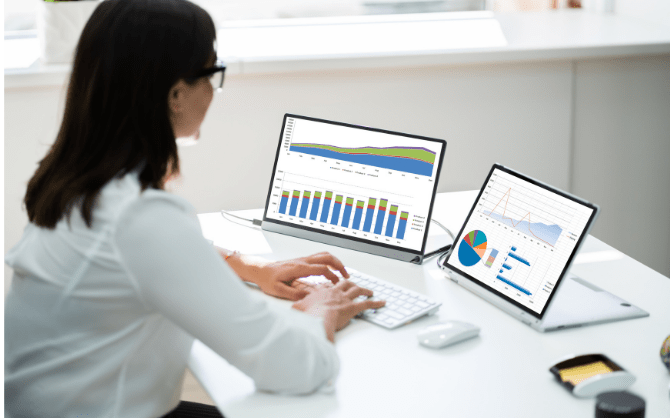
Once you have good data, Data Analytics Software can play a huge part in understanding trends and outliers. When data is visualised well, it helps to tell a story by highlighting the useful information in a form that’s easier to understand. Understanding this information is critical to ensuring you are spending your time, money and resources in the areas that will really help increase the safety of your people.

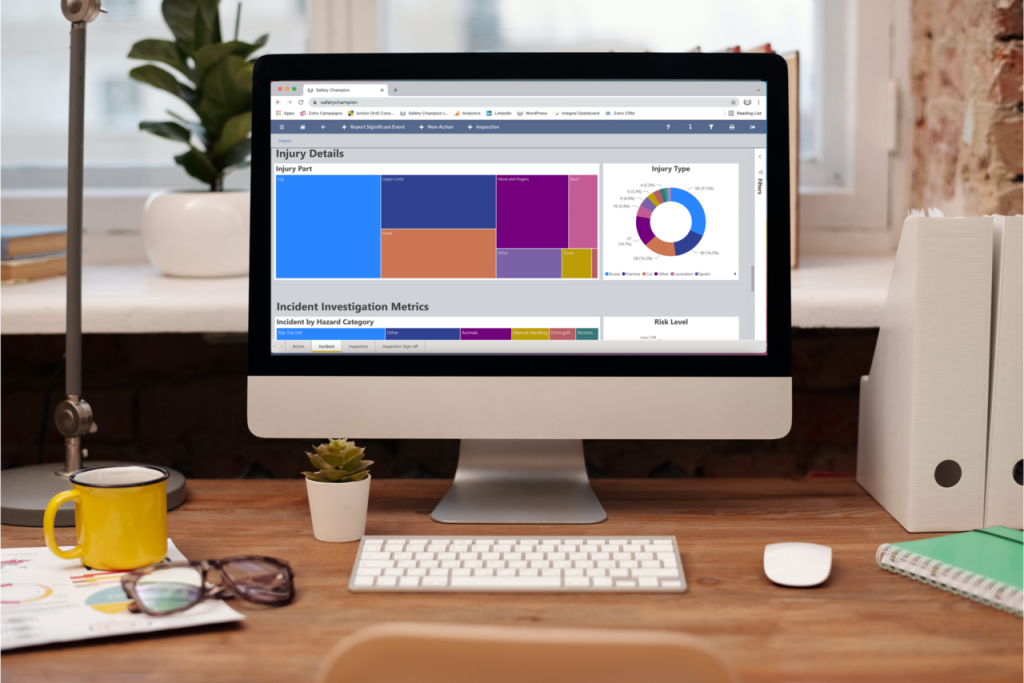
Powerful data and analytic tools will show you exactly where you stand on workplace health and safety. Safety Champion’s Data Analytics Module effectively visualises your data via customisable, interactive dashboards – identify user behaviour, understand how your workforce interacts with the system, and importantly, make informed data-driven decisions on visible trends.

Read more about our Data Analytics Module

Leadership

The importance of tracking safety metrics

Do you measure the performance of the health and safety program in your workplace? When a company has a safety program in place but doesn’t know how effective it is, they’re putting their employees at risk. If you have no idea if your safety program is performing as it should, how do you know if it is being efficient or where improvements could be made?


The answer is to implement safety metrics.


Safety metrics are designed to help organisations like yours to measure how their safety programs are performing against predefined goals, and to identify potential gaps or areas for improvement within the health and safety program of your business.


They are a crucial resource to refer to when making any decision around health and safety in the workplace. So, if you haven’t, you really should be considering implementing safety Key Performance Indicators within your health and safety program today.


What is a safety KPI?

Key Performance Indicators, or KPIs, are metrics that are predefined targets to aim for. In turn, setting KPIs helps to measure the performance of an organisation, based on how far it exceeds or falls below these targets.


There are two main types of KPI indicators within the health and safety sphere, and helpfully they are from the same letter of the alphabet:


  1. Lagging indicators are focused on past statistics such as how many people were hurt or how severe their injuries were.


  1. Leading indicators look after the measurements of the actions taken to prevent incidents from happening in the first place, such as safety inspections and safety training sessions.


Using a combination of both of these indicators is the most effective way to measure the effectiveness of your safety program. The best thing is you don’t need to start from scratch. Safety Champion software can make this process easy.


Safety Champion software can, for example, allow you to track your established KPIs and alert you about actions that require attention and correction. Furthermore, it offers the capability to track the number of incidents that have been reported, closed, and that remain open.


Why do you need safety KPIs?

Tracking your safety KPIs works not only as a diagnostic tool to identify the safety problems within your organisation, but it can also be a driving force for future planning and improvements and ultimately for the success of your business. Visibility to KPIs and associated organisational metrics works to give you visibility of the overall health of your company in terms of safety. What’s not to like about that?


In addition, KPIs can readily assist your safety managers to better understand areas that are working and not working. This will ultimately steer your company’s safety program in the right direction and provide the framework to take immediate action to solve safety issues that may arise. When implemented correctly, your KPIs will do the heavy lifting so you don’t have to.


How do you decide on your safety KPIs?

There will be circumstances specific to your business that will determine what specific safety KPIs you implement. Factors such as your company’s business operations, goals and strategies, your current risk management activities, existing safety systems and workplace culture can all play a part in what you want to measure, and ultimately how well your health and safety program will perform.


When deciding on what your safety KPIs should be, it can be handy to ask yourself a set of questions:


  • Where does our organisation currently stand regarding its health and safety performance?
  • Where do we want to be tomorrow?
  • Who within our team receives safety KPI data and what do they do with it?
  • How are safety KPIs and the conclusions that are drawn from these communicated to others within our business?
  • What are our aspirations for driving change within the organisation?


Your business is special. What works for one company may not necessarily work for another. It is important to recognise that different industries have their unique set of safety priorities that they want to focus on, and this ultimately will determine the metrics they choose. What are your safety priorities?


Examples to get you started

If you’re unsure of how to get started on developing your own safety KPIs, here are some essential safety metrics all workplaces should consider implementing:


  • Incidents and Near Misses


Reviewing the number of near misses that have been reported offers a very good idea of where within your organisation the occurrence of incidents or injuries is most common, and consequently where there is a high probability of occurrence in the future if preventive actions are not taken.


Safety Champion’s powerful reporting allows you to identify the type of incidents that have been reported across your organisation, or from a specific area or department within your workplace. It also allows your employees to self-report incidents, which ensures your safety KPIs will become collaborative goals across your business.


  • Inspections and Audits Completed


Keep track of the number of safety audits and inspections your organisation undertakes in all areas of your operations. Take record of when you complete these, and who within your business operations meets your safety standards to keep track of any changes.


Safety Champion software can make this process easy, by giving you automated reminders to undertake your audits and inspections, whether you decide to do these on a monthly, quarterly or annual basis.


  • Corrective Actions


Having a high percentage of actions resulting from incidents might mean that you need to consider corrective and/or preventative measurements to prevent the incidents from happening again.


Gather the number and type of corrective actions taken from hazardous incidents whilst keeping an eye on the time frame it takes to complete the corrective actions associated, or indeed if they are being completed at all. This collation of data can also be easily achieved with Safety Champion Software.


  • Employee Training


Implement relevant health and safety training for all your employees, from full time to contractors, to effectively establish health and safety practices and reporting. Again, Safety Champion Software can assist you in keeping track of your employee training records and the implementation of a training schedule.


If all your employees are aware and understand your health and safety procedures and policies, you are well on your way to creating a positive safety culture and engaging your workforce with all things safety. You’ll be ensuring you remain compliant and be on your way to successfully measure against this KPI.


It cannot be stressed enough how important the tracking of safety KPI’s within your health and safety program can be to the overall effectiveness and performance of your business operations. If you proactively promote a safety culture within your organisation, you are taking an important step in encouraging your employees to participate actively in reporting safety metrics.


Moreover, by determining the key metrics and finding the right balance of those that would suit your unique business you will help senior management to get a clear picture of what steps need to be taken to protect their employees from risk and harm. Having a powerful reporting system in place such as that offered by Safety Champion Software, you will be well on your way to implementing and measuring your key performance metrics and ultimately keeping your employees safe – a key indicator of success.


To experience effective and powerful reporting of safety metrics, sign up to a 14-day trial of Safety Champion Software today. 


Leadership

Strategies to include all your employees in the workplace safety culture

When implementing safety policies and procedures in our workplaces, the focus is often on our permanent employees. But did you know that temporary and casual employees, and contractors, are more prone to health and safety risks?


Organisational issues such as economic or reward pressures, inadequate implementation of supervision, ambiguity in rules and procedures, improper training, and more complicated lines of management reporting often result in the staff that aren’t always front of mind slipping through the safety cracks and experiencing workplace incidents.


It’s a serious issue, but one that can be easily addressed. It’s about ensuring you dedicate the right attention to communicating your health and safety materials, coordinating the right training, supervision and induction to all staff who begin working at your business-whether they are there for a short or an extended period of time.


Communication is Key

An easy way to ensure you start as you mean to go on is to implement an arrival induction even before any temporary contractors or suppliers start tasks on your site.


It is important for both you and your onboarding staff members that the basics of safety and health requirements of the site, and expectations around what to do in case of an incident or risky situation are clear and understood by both parties. In this way, inductions and safety talks are key to ensure these colleagues know the safety rules and understand the main hazards of the jobs they are running.


This communication can be performed effectively using the forms in Safety Champion’s Communication Module. You can send out templates such as:


  • An arrival induction form including messages and videos for onboarding employees to learn and to be informed about your organisation’s health and safety protocols.


  • A pre-engagement email automatically generated for a new contractor that contains health and safety training modules. This will ensure the contractor has the company knowledge and follows and accepts the safety and health practices of the site or company who is hiring them.


Check your Invite List

Temporary workers, contractors and suppliers operating on your worksite should always be invited to relevant safety meetings in the same way that you invite your regular employees.


This is such a simple but also crucial opportunity to ensure that all staff, no matter what level of employment they have within your organisation, do not miss the chance to know what is going on concerning health and safety within your workplace. Safety meetings should be conducted as regularly as possible.


You can also use these meetings to ensure temporary staff are up to date with the latest health and safety procedures implemented, and they can also gain insight on or share from their own experience on opportunities for continuous improvement in your workplace.


Health and Safety KPIs

It is a great idea to include the health and safety metrics associated with your contracted resources, for example, the number of near misses or hazards reported, within your overall safety KPIs.


If the companies that employ your temporary workers, contractors and suppliers are aware that their safety metrics are overseen by your organisation’s management, it is more likely that they will take the health and safety of the staff contracted to your organisation more seriously.


This will also enable your temporary staff to feel more encouraged to report hazards or improvement opportunities within your workplace.


Regular Leadership Check-ins

A recurring performance review meeting with the leadership team of the contractor or supplier companies working on-site is essential to reinforce the safety message and expectations of the company.


Moreover, if the leadership positions within the contractors and suppliers are clear about safety expectations, it is more likely that the safety message is properly shared and communicated to the rest of their staff.


So, there you have it. If you implement simple strategies that can help employers get started, no matter their level or hours they are contracted to work, you’ll be on the road to ensuring the health and safety of everyone who helps make your business a success.


To help ensure your safety communication reaches all your employees, sign up for a trial of Safety Champion Software.

Insights

Essential health and safety tips for every Australian retailer

The retail industry is one of Australia’s biggest employers, but it’s also where Australia’s workers often get hurt. Did you know the most common injury for people working in retail is to their back? According to WorkSafe Victoria’s handy Injury Hotspots site, back injuries represent a significant 26% of injury claims. These back injuries can be caused by muscle strain from lifting and handling objects/equipment, slipping on floors or uneven surfaces, or tripping over objects.


Australians are out of lockdown and back shopping again. As the government eases coronavirus restrictions and more retail stores begin to reopen, business owners need to not only focus on getting back on their feet financially but also, crucially, they need to be across the prevention of workplace injuries such as those outlined above.


Due to the diverse nature of retail employee situations, ranging from part-time, full time to casual staff, it can be challenging to create the desired level of awareness on the health and safety risks across your workforce. Nevertheless, health and safety compliance is so important, and probably more so now than ever before.


So, while it is certainly a relief to see the retail sector recovering after 2020, in the rush to unlock those doors retail businesses cannot become complacent, especially where the health and safety of their employees is concerned. Whether you have just one or multiple stores under your umbrella, prioritising profit over the assessment of safety hazards to employees returning to work is a dangerous path to take.


Here are the key considerations every retailer should take into account to keep all their employees safe:


Support your store managers 

A store manager’s role is highly demanding. Whether it be ordering stock, implementing a new in-store campaign, or organising a surprise birthday cake for one of their weekend casuals, a store manager has to wear multiple hats to ensure your business runs smoothly.  As an essential bridge between your employees and head office, they are also your key to identify and help to address health and safety concerns that arise in your stores.


Often store managers lack safety knowledge so it is important to ensure they are trained well, as they will most likely be the ones training their staff. If they lead by example, they can be a source of inspiration for the employees and promote safety engagement improving overall performance across your stores.


Train your employees

Whether it’s being able to identify hazards in store that may cause injury, to having the knowledge to deal with a difficult customer, regular health and safety training for your employees is essential to maintain safety standards across your business. It doesn’t matter if your employees are working in the warehouse or are racking up sales in-store, every staff member needs to be aware of the common hazards and risks associated with their roles.


Due to the diverse nature of work in the retail sector, your employees should be trained to handle a variety of situations that they may encounter in different ways. By assessing, monitoring and evaluating your employee’s knowledge before and post-training, you will be able to see areas in your training where you can make improvements.


Try implementing different learning tools and methods to train employees, as you can customise these tools to how your employees learn best. Technology can be an effective and low-cost way to train your workforce, such as through live streaming video sessions. This also has the added benefit of allowing you to train your employees across multiple sites simultaneously.


Making safety training documents readily accessible to your workforce is also essential. This can also be achieved in cloud-based safety software like Safety Champion.


Protect your customers

Retailers should ensure that the stores are inspected often to identify hazards that can disrupt the safety of their customers. After all, what is your store without your customers? The focus today is around the proper COVID-19 related signage and check-in requirements, but these shouldn’t mean you stop completing your normal business as usual health and safety checks.


Regular fire extinguisher and smoke alarm checks, assessing uneven or slippery floors, and recording lighting levels and air quality are all ways to identify hazards early, and to protect your customers when they set foot into your store


Manage safety with ease in multiple stores

Do you have stores in multiple locations? Many business or franchise owners can find it difficult to maintain a level of consistency concerning policies and procedures across their stores. But with the right safety procedures and systems in place, retailers can keep everyone safe.


The success of any retail business depends upon unity of people, process and systems. Having robust safety management software can come in handy for maintaining the health and safety standards across multiple stores.


A centralised system such as that offered by Safety Champion can help safety leaders get an overall picture. They can monitor all in-store safety activities and analyse trends over time, identifying gaps or areas for improvement. Safety management software can also help to establish a unified standard for a business’s safety procedures across all its sites.


Your management can use this software to communicate with employees on the latest safety process updates. Additionally, safety documents for inductions, training, contracts, and policies can be created, edited and sent to those in your business wherever they may be working.
Sign up for Safety Champion today to receive your free trial of multisite safety management software.

Insights

Top Health and Safety Tech Trends in the manufacturing & industrial sector

The manufacturing and industrial sector is always on the lookout for new technologies.


Usually, technology is adopted because of its positive impacts on improved workplace productivity and efficiency, and resulting in increased return on investment. But it is important to note that the latest technology can also be of immense benefit to work health and safety practices established within our workplaces.


Whether implementing brand new technology or upgrading to the latest on the market, it’s not just about making an organisation look efficient and productive. It has to work too – especially when it comes to the health and safety of your people.


When implemented well, new technology can greatly improve a workplace’s ability to adhere to health and safety laws.


There are many ways in which the latest technology can be used for safety purposes. Safety monitoring, reporting, training, and communication can always be improved upon, and updating tired and traditional methods can be a good solution to drive improvements in overall safety.


So what’s happening in technology for health and safety in the manufacturing and industrial sector? Here are a few of the latest technologies that are trending right now:


Work health and safety training with augmented reality

No longer just in the movies, augmented and virtual reality equipment is becoming increasingly popular in health and safety training in various industries.


Virtual reality allows workers to be exposed to very high-risk situations in a completely safe environment. Rather than reading about a hazardous scenario in a manual, they can experience the situation virtually and effectively train for a real-life scenario.


Hi-tech safety wearables in manufacturing

Safety wearables such as smart goggles and smart vests are not only this season’s must-have looks, but they can also be used by employees for improved visibility within their workspaces.


Wearables help reduce risk and human error and improve response times in the event of an accident. These items can also produce timely and trackable data that you can use to help improve work conditions and worker accountability. For example, smart glasses, with specially embedded cameras, can record details of the wearer’s work to ensure they are performing their role safely.


Smart jackets and vests can quickly report to its wearer with environmental data such as air quality, airborne pollutants and noise levels. They can also measure heart and breathing rates, perspiration rate and orientation, and send vibrations to the wearer as a warning signal when safety thresholds are surpassed.


Who knew a piece of clothing could be so smart?


WHS software and mobile apps

Health and safety apps can help you stay connected with your team, irrespective of their location and whether they are on site or working remotely.


OHS mobile apps are also a quick and easy way to capture and report hazards in the workplace, and some even have the ability to report incidents offline too.


Because everyone from your workmate, Gary, to your dear old gran carries their phone with them everywhere these days, this is an easy way to implement a reporting process.


Safety Champion Software is one such example, and it can ensure you can report offline when you have restricted access to the internet. This is especially useful at times where critical events are occurring, or in areas of factories with limited coverage and where the internet cannot be accessed.


Using healthy and safety software has the added benefit of giving you real-time data to monitor ongoing process and can be used to drive improvement within your workplace health and safety procedures.


It also keeps a record of all your past data so that you can easily evaluate your safety performance over periods of time. So, it might just be time to say goodbye to that filing cabinet full of paper-based forms and replace it with a nice plant to brighten the office.


Benefits of looking to technology for better safety

Advancements in technology have always gone a long way in assisting the prevention of workplace injuries and fatalities. As tools and gadgetry like those mentioned above become ever more sophisticated, workplace safety will only become all the easier to manage.


To finish us off today, consider some of the key benefits of getting the right technology in place in your organisation;

  • When implemented well and in alignment with an organisation’s overall health & safety program, technology can help keep your employees happy, and most importantly, safe.
  • Your employees will feel a greater personal sense of safety knowing they have a high level of protection.
  • You can monitor and track your safety progress, and quickly find areas for improvement. The future of tech in this space will even be able to predict areas that need attention.
  • Technology brings greater productivity and efficiency by reducing administrative burden doing things the old way.
  • Great tech will allow you to continually improve and spend your time and energy on parts of your operations or business that need attention.


So why not sit down with your leadership team and think about how you can improve health and safety practices in manufacturing with the additional of a little tech bling. Not only could you see great improvements in performance, but your team will certainly appreciate the effort and resources you put in to help keep them safer while they work.


Start your 14-day trial with Safety Champion Software as a first step towards embracing tech in your safety practices.

Insights

Managing The Health and Safety of A Virtual Team

The reality for many businesses today is that they will have a portion, if not all, of their team working virtually. Whilst this was the case for a growing number of businesses pre-COVID-19, it has become considerably more globally widespread across many industries as a result of the pandemic.


If you’re considering keeping some or all of your team set up virtually as part of your post-pandemic operations, it is important to consider how you can manage and uphold strong occupational health & safety practices in the remote working environment. This way you will ensure your employees remain safe from harm.


Assessing the safety of remote workspaces

You may not be able to physically see your employees, but you are still responsible for their health and safety.


Don’t fall victim to the old ‘out of sight, out of mind’ adage; the health and safety of your team members working virtually must be protected in the same way as you would protect the employees you have working on-site.


Ask yourself:

  • Do they have a safe space to set up a workspace in their home?
  • Is their space free of electrical and other physical hazards?
  • What about risks to their mental health?
  • Do they have appropriate lighting and ventilation in their remote workspace?
  • Do they have access to bathroom and kitchen facilities?
  • Are their smoke alarms operational and are emergency exits known?
  • Is their computer software safe and secure?
  • What about their active management and knowledge of COVID safe practices?


The types of questions above are commonly asked when assessing whether an office space is fit for your employees to use. It is just as important to ask the same questions if your employees are now working from their beach house, or the breakfast bar at home while feeding the kids.


You should be considering their home workspace as an extension of your traditional workplace or office. Their space must be free from risks and hazards. If an employee of yours is injured or cannot do their role to the best of their ability within a remote working environment, you as an employer may be considered legally responsible.


So how can you keep your employees safe and stay on top of these potential risks and hazards when you cannot physically see them?


Greater visibility of virtual workers using a cloud-based safety solution

The answer is cloud-based safety management software. Accessible wherever your workplace may be, and wherever your employees are physically located, cloud-based software makes it easy for you to stay compliant with your Occupational Health & Safety (OHS) responsibilities


It also means you can keep all your workplace-specific safety communications in one secure location for your entire workforce to easily access.


No more rummaging in filing cabinets for a safety manual or loading paper into the photocopier to print out a safety checklist. All-important OHS information is readily accessible online for your entire workforce. Everyone is on the same page.


Cloud-based safety software enables you to collate entire safety data from all of your employees, even if they are working across multiple locations. Having all of your data in the one place allows for consistency in your messaging across your virtual and non-virtual teams.


Your employees can also easily report any safety-related issues they may experience in their remote workspace securely and confidentially whilst online.


Safety software can also help you to create and delegate important tasks to your employees. Tasks such as asking your employees to perform ergonomic workstation assessments, or to arrange for safety audits of their environment, are relevant examples.


Such functions can be easily set to repeat at regular intervals.


These regular reminders to complete OHS tasks will ensure that health and safety becomes a normal part of your employees remote working routine, alongside scheduling in that second cup of coffee for the morning.


The benefits of safety management software

Safety software greatly assists with ensuring your remote workforce has ready access to health and safety guidance and information. This tech tool helps you feel confident that important communications from head office are shared and seen, when and as needed.


As your employees continue to find their groove in their new remote ways of working, they will feel safe from harm knowing that their health and wellbeing is considered a priority by you, their employer, no matter where they may be working from today or tomorrow.


If you are keen to learn more please reach out to us today, or alternatively start a free trial here.

Leadership

Tracking Your Impact

Every National Safe Work Month, our team gets together to think about ways we can contribute ‘above and beyond’ to the work health and safety sector. After all, this is our passion. This is what we love.  


We always start with a simple question:  


How can we help all workplaces push for excellence in health and safety?  


We start with this question because we know that work health and safety has, let’s just say, complicated reputation. It’s often perceived as complex and confusing. Business owners and leaders are often unsure about what to do to ensure compliance with legal duties.  


And for this reason, we strive to make great safety management easier and more accessible with our software, and supporting consulting services. This is in fact our mission, and it’s something we strive for every day. 


Last year’s big idea in safety management


During Safe Work Month last year, we launched Safety Champion LightThis is a brilliant 100% free safety software plan that allows organisations of all kinds to boost their safety practices.  


Our Safety Champion Light customers can access some of the most integral features and modules required for great safety management – all without a fee. With great modules like inspections, incident management, planning, and hazard management, our Safety Champion Light really does deliver above and beyond – and that’s exactly what we wanted. 


Since its launch, we’ve seen approaching 1,000 organisations sign up to this plan and start working towards better safety outcomes.  


This year’s big idea in safety performance


This Safe Work Month, we’rproud to launch the Safety Champion Impact Assessment. This fantastic new tool is designed to help our customers reach further than ever towards great safety management and compliance.  


The Safety Champion Impact Assessment allows our customers to track and measure their impact in safety, and make improvements that matter, over time. 


From baseline data, we check back in and re-assess key metrics on a regular basis, allowing our customers can see how they are tracking across four key pillars of safety: 


  • Safety Compliance 

  • Leadership in Safety 

  • Control & Delivery 

  • Awareness & Engagement  


The Safety Champion Impact Assessment take our customers to the next level when it comes to safety. It truly bring safety into greater focus at all levels of the business by allowing businesses to report on and share meaningful findings and evidence of progress.  


A focus on safety during Safe Work Month 


We love this time of year at Safety Champion software. October in Australian workplaces is all about increasing awareness about great health and safety practices. This includes a focus on mental health in the workplace with #mentalhealthawarenessweek in the month of October as well.  


It’s a great time for any organisation to start the conversation around how safety practices can be boosted to support the safety and health of everyone. 


So why not take safety that step further than mere compliance this National Safe Work Month. Why not go for gold in safety excellence! 


With the Safety Champion Impact Assessment tool, you can bring safety into greater focus in your workplace, report and share the results, and make integral shifts throughout your business working towards fantastic, holistic safety management. 


Learn more about this tool today: safetychampion.com.au/impactassessment
Scroll to Top

Sales Enquiry

Clayton Scott
Sales Manager

Let's talk about safety
in your business.

“If you’re looking for a partner who understands the safety landscape and can help you implement scalable, compliant, and practical solutions, let’s start a conversation. I’d love to hear about what you’re working on and how we can help.”

Contact Us