Author name: cgeyy

Insights

How to tame your documents…

For many businesses, document management is hard. Ensuring that documents are controlled so obsolete documents and superseded versions are not in circulation or being used can be difficult. While workplaces print our forms to allow easy access by workers when in need, these need to be removed when a document is updated. Whist on the surface, there may appear to be minimal consequence if an incorrect OHS document is referred to; should the OHS document be a work instruction, the result may be dire.


Documents are the guide for OHS implementation (i.e. the checklist template, the meeting agenda); whereas, Records demonstrate implementation of your OHS System into your workplace (i.e. the completed checklist, the meeting minutes).


If you are looking into way to tame your OHS documents, the following provides some nice direction on where to start:

  • Undertake sweep of documents that have been printed – are only the current versions available? Moving forward, can you look to review available OHS documents when undertaking workplace inspections?
  • Plan. Identify where you intend to store your OHS documents. Aim to store OHS documents in a secure location that can be accessible by all required stakeholders. This may be via an intranet and/or for a smaller business a Google Drive or Drop Box. Where ever you decide to store your documents, you should ensure that there are restrictions on who can edit or delete the document.
  • Develop a register of all OHS documents that have been developed for use within your organisation. Whilst Excel is a good start – ensure that those who can access and edit this document is controlled.
  • Determine who, or which department within your workplace will be responsible for maintaining, authorising and updating each OHS document. These responsibilities may be assigned as a whole or by individual document. List the person or department on the “OHS Documents Register“.
  • On each individual OHS document, (generally within the document footer,) as a minimum record the:
    • Document title
    • Date
    • Page number, and
    • Version number.
  • Make sure that you record all the information that you just included in the footer of your OHS document into the “OHS Documents Register“.
  • And finally, on the “OHS Document Register“, keep notes of all the changes that have been made to each OHS document.

The “OHS Documents Register” will be your key for clarity and managing the whole document management process – so, make sure you back it up!

This all said, if you are reading this thinking that “it’s all a little hard”, maybe cursing and perhaps of the opinion that the chances of an “OHS Document Register” being maintained is a crazy suggestion for us to make, then here’s an alternative idea for your consideration…Safety Champion. Safety Champion Software has a Document Management module that can do all of this for you. In addition, it will archive soft copies of obsolete OHS documents so they are can’t be accessed, but are never lost. Yes, it’s web-based, paperless and accessible on all your devices, but more importantly it will save you a stack of time and establish an efficient document management process, that will ensure your workers have access to your most current OHS document every day and every time. it is document Management made easy.

Insights

How to tame your records…

For literally every business out there, records management is the bane of everyone’s existence. Regardless of whether you are filing the “old school way” (i.e. shelves and shelves of paperwork, or folders in archive boxes), or you’ve moved into the “now” and you’re all cool and all about digital (i.e. scanned copies stored on internal computer drives), records management can be a headache.


Records demonstrate implementation of your OHS System into your workplace (i.e. the completed checklist, the meeting minutes); where as, Documents are the guide for OHS implementation (i.e. the checklist template, the meeting agenda)


When it comes to OHS records, the legislation actually requests that you to hang on to some for up to 30 years. Yep, 30 years! This said, there are other OHS records that the legislation requires you to hold onto for what may seem forever (i.e. the length of time a piece of equipment is at the workplace)! Nervous? Don’t be. Just get organised.

Yes, you can store records in folders. The challenge with this is finding them when needed, or identifying trends – once filed, often the OHS records is never to be seen again. These days, with the ease that we use computers, paper-based records appear harder to locate. Perhaps the level of “hardness” is at where it has always been, the ease of access via a computer has just shone a spotlight on it.

This said, when looking to establish a plan for managing your OHS records let’s get one thing straight. It is crucial that OHS records are not stored on employees personal computer drives or on an employees computer. Why? It is simple, if the employee leaves or their computer is lost, it is likely the OHS records will go missing also.

If you are a smaller business, Google Drive or Drop Box will support secure control of your documents; depending on your settings, deleted documents are archived not lost. Don’t be restricted to these two, there are a number of options out there for you to consider.

If however you are reading this and thinking, wouldn’t it be great if…


“When I store an OHS record, the saving of the record would then schedule the next occasion that the task is to be completed”


…then your thinking has aligned with ours. That’s exactly what we created with Safety Champion. Safety Champion offers a simple OHS Software solution for records management. Of course it’s web-based, paperless, and available on all devices. It will allow you to save all of your OHS records neatly in the cloud, to ensure that they can be easily access when the need arises. Great for management visibility of your OHS program, and amazing for OHS or compliance audits.

Leadership

Three questions you need to ask to positively lead mental wellbeing discussions in your workplace

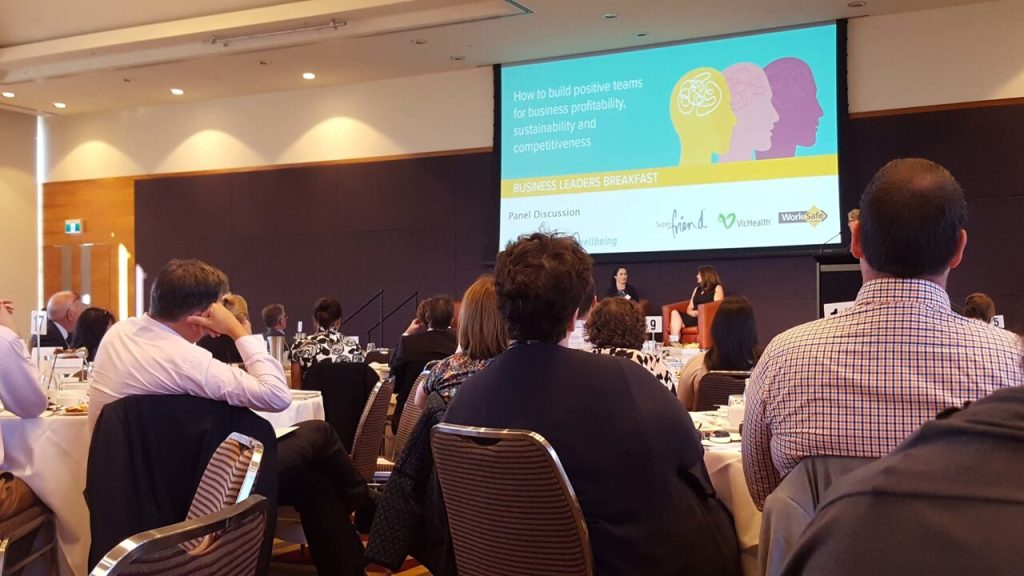
The Victorian Workplace Mental Wellbeing Collaboration Business Leaders Breakfast was held on 7 March 2017. We were keen to be there, so arrived promptly at 7am, with coffee in hand, of course.

Mental wellbeing is a hazard that most workplaces are nervous to engage in conversation about and as OHS professionals we definitely get that. Unlike a broken bone or laceration, a mental health injury isn’t always noticeable, which can make it hard to manage. This said, as mental health becomes better understood and more accepted as a health hazard in the community, awareness of the positive benefits associated with mental wellbeing are becoming more and more prominent in a workplace. The great thing about awareness is that it provides workplaces with an entry point to start conversations with their workers.


How would you assist a worker who came to you with a mental wellbeing issue, or advised you that they were struggling or needed support?

How to manage such a situation was one of our team’s main take-aways from this breakfast. And the good news is that once discussed in the open, it felt as easy as A, B, C.

To facilitate tangible and positive outcomes as a manager, it is crucial that rather than talk, you listen. Frame your conversation with your worker around the following three questions:

  1. What is it that you need to do your job and to go home every day with energy to enjoy the life you live?
  2. What are you going to do differently to support your wellbeing in the workplace?
  3. If I see that you are struggling or not performing, how would you like me to approach you? Tell me the exact words do you want me to use.


Now, more than ever, it is important for workplaces have the confidence and the skills to manage mental wellbeing issues when they arise in the workplace.

So keep these questions at hand. Practice the conversation with your peers and seniors. Get comfortable and be prepared. If you can effectively create an open and supportive space for your workers to feel confident to speak about their pressures and worries, you will have a much better chance of addressing the issue and protecting the health and safety of your workers. And this will result in positive outcomes for your worker, yourself and your business.

Over the coming months, we’ll be providing more ideas and thoughts on ways that you can improve your capability to promote and manage positive mental wellbeing in your workplace. Stay tuned for more from us.


The Leaders Breakfast was headlined by Mary Ann Baynton, Program Director for the Great West Life Centre for Mental Health in the Workplace, and Chair of the technical committee for the National Standard of Canada on Psychological Health and Safety in the Workplace.

Insights

This is an office. That OHS stuff doesn’t really apply here…

Right? Well, not quite. Actually, health and safety legislation in Australia doesn’t distinguish between industries or workplaces at all. Your duty to provide a ‘working environment that is safe and without risks to health and safety’ still applies even if you think it’s just those guys hanging off the side of your building cleaning the windows who have something to worry about. The health and safety of office workers is just as important.


So, what do you need to need to be aware of exactly? Well, OHS legislation is really all about mitigating risks to the health and safety of your workers. The legislation actually outlines a few duties that you, as a business owner or manager, can use to help you frame how to respond to it. Here are just a few of the things that relate to office workplaces to give you an idea of what we are talking about:


Emergency Management – What’s the plan if there’s a fire, serious injury, or aggressive customer?

Worker Training – Is OHS in your induction for new employees? Do your workers know the basics?

Consulting your Workers – When was the last time you spoke to your workers about OHS?

Incident Reporting – Did you know you need to keep a record of many injuries?

Managing Hazards – How do you manage:

  • Electricity – How is damaged equipment removed?
  • Housekeeping – Are there broken chairs lying around that someone might sit on?
  • Heavy Lifting – Do your staff sometimes carry heavy items around? Should they?
  • Stress – Are workloads increasing right now? Are you going through a big change in procedure or structure? Read more about stress management here.
  • Workstation ergonomics – What equipment have you provided? Is it suitable?


You are probably already starting to think about some things in your workplace that you really should look into further, right? But don’t worry. It’s not as hard as you think to put some solid control measures in place to prevent unnecessary injuries and illnesses.


To get started or to refresh some of the procedures you used to have in place, try reading a few of the resources below for more information, setting up a meeting with your workers (if you have OHS representatives great!) to review your procedures and policies, engaging an OHS consulting specialist company to help guide you, or even trying a software system like Safety Champion which comes with all of the checks and measures you need, tailored perfectly to your business needs. The good news is that if “stuff” is happening, your procedures don’t need to be documented – you just need to be able to demonstrate that you are doing something. If you look to document them, which can improve consistency and support knowledge transfer, try to avoid long and lengthy – could a flowchart or playbook better suit your business?


Sounds like a hassle, but the good news is that doing this right is good for business too. Ultimately, well implemented health and safety practices in your business will likely result in improved productivity and a healthier and safer office culture.


After more detailed information about this?

Here are some detailed docs about First Aid: First Aid in the Workplace Compliance Code (VIC) and Code of Practice First Aid in the Workplace (Other States). In addition, our friends at Alsco have 40+: (i) first aid signs, (ii) first aid visual guide posters; and (iii) first aid posters, that are all freely downloadable and print ready. And here are some more docs about managing the working environment: Workplace Amenities and Work Environment (VIC) and Managing the Work Environment and Facilities (Other States)


How To Prevent Stress From Escalating In Your Workplace?
Trending

How To Prevent Stress From Escalating In Your Workplace?

This is news to a lot of businesses we work with, but currently work-related stress is the second most commonly compensated illness or injury in Australia. So, it’s a big deal and something for businesses to certainly watch out for. But how does it escalate to this point? And what signs can you look out for to ensure that your staff don’t burn out before year-end?


Did you know that mental stress costs Australian businesses more than $10 billion per year? [Safe Work Australia, 8 April 2013]


Work-related stress often arises when work demands exceed a worker’s capacity and capability to cope. This may be seen through changes in a worker’s mood such as increased nervousness, low morale, inattentiveness, anxiety, negativity and frustration. But it may also become apparent through changes in your workers ability to perform to their usual standard. If you notice changes in staff productivity such as missed deadlines, changes in quality of work, tense relationships between staff, and increased sick days, ask yourself whether there may be a stressor in the workplace contributing to or causing this.


Workplace change such as restructures, new leadership, and other major organisational events like EOFY are known workplace stressors. Therefore, it is important that you consider the health and safety of your workers whenever your business is undergoing any of these events. Be on the front foot to mitigate the risk of stress on your staff. During these times, and anytime you notice the tell tail signs of stress mentioned above, ask some of the following questions:


  • Have you placed unreasonable deadlines or pressure on your staff?
  • Is there a change in the duties you have asked them to perform?
  • Are you over- or under-supervising?
  • Is the work boring or without challenge? Is it too hard?
  • Do your workers have the resources to fulfil the duties of their role? This could be time, skills, team members, or physical resources.
  • Is there an adequate working environment or equipment available?
  • Has there been adequate opportunity for promotion, training or upskilling?
  • Is harassment or discrimination being experienced?


Identifying risk is the first step to managing stress, just like any other hazard in the workplace. So, look out for the early warning signs and communicate these to your business leaders, Health and Safety Representatives and workers. Then you can assess them, determine effective control measures and prevent stress from escalating into something much more serious.


Remember that stress not only impacts your workers’ productivity and quality of work, but it can also extend beyond the workplace and into your workers’ private lives. And of course, the last thing that any of us want is to affect the family life, personal relationships and health of our colleagues around us.


Looking for more direction on how to identify whether stress may be a hazard in your business? Take a look at WorkSafe Victoria’s Stresswise Toolkit Worksheet. What we love about this resource is that it provides businesses with a simple approach that can be easily implemented at your workplace. Just like what we at Safety Champion do.

Insights

Planning this year’s Christmas Party? Know your health and safety role

Yes, Christmas is a great time to celebrate the year’s achievements and let loose with your colleagues and workers. It’s a fun event and one we certainly look forward to each year. However, many employers are surprised to hear of their responsibilities in terms of ensuring their workers are safe and healthy at these events. Because, actually, a workplace-endorsed event like a Christmas party means many occupational health and safety rules and regulations still apply. So, let us give you a run down.


In most legal contexts, the work Christmas party is considered part of the work environment – even if the party is held after hours or offsite. So, this means that your responsibility to provide a safe environment for your employees still applies. As such, your workplace risk management practices with respect to health and safety need careful consideration for these kinds of events. And they become a little trickier when alcohol is added – the risk is obviously heightened.


It is important for businesses to understand that they may be liable for any employee injuries that occur before, during or after a workplace function, regardless of whether the injury happened as a result of the employee being intoxicated.


A ruling by the NSW Workers’ Compensation Commission accepted a claim lodged by an employee who was injured following business drinks with a client. Even though the employee was intoxicated at the time of the injury, the NSW Workers Compensation Commission found that socialising with the client was in the course of employment.


But it’s not all doom and gloom. Like all other hazards in the workplace, you just need to take the steps to understand and mitigate the risks for your upcoming Christmas party! Here are some suggestions from us:


Risk Assess. Document a risk assessment that identifies all foreseeable hazards and their defined controls, and incorporate this as part of your event planning. For example:

  • Do you have a plan in place for managing intoxicated guests?
  • Do you have a plan in place for managing uninvited guests?
  • Have you considered security options? Does the venue provide security, or should you hire your own?
  • And don’t forget to consider a site inspection prior to the event.


Revisit and Remind Your Employees of Your Expectations. In the days prior to the Christmas event, remind staff by email or memo about the expected standards of behaviour, and the disciplinary consequences that may take place. This should see you reinforce your workplace’s OHS, EEO and Code of Conduct Policies to all attendees.


Be clear. Explain to guests when the event will finish. Clearly set out defined start and finish times for the event and ensure that these are stated on the invitation. Realise that arranging or paying for drinks at an ‘after party’ will most likely extend your liability.


Travel. How will workers travel to and from the function? In some states, remember that your workers compensation obligations do not just cover the employee’s time at work, but also extends to the journey to and from work – in this case the Christmas party.


Manage alcohol. Consumption of alcohol is likely to be a key risk. Consider restricting the amount of drinks or the strength of drinks that are available. If possible, avoid table service and ‘top-ups’ as it makes it harder for employees to break between drink or keep track of how many drinks they’ve had. Always have non-alcoholic alternatives available.


Provide food. A meal or finger food has been shown to slow down alcohol consumption. Also, Provide substantial and diverse food options making sure dietary requirements are catered for.


Supervise! Appoint someone to be responsible for overseeing that the festivities run smoothly. This person should monitor safety hazards such as wet floors, loose cables and manage incidents that may occur during the event. What are your internal first aid procedures? Supervision should include monitoring the controls identified within your pre-event risk assessment.


Debrief. In the days following the event, review the pre-event risk assessment and evaluate the effectiveness of the identified controls. Good documentation at this end will support your planning for next year.


And finally, while health and safety is important, it should not be a blocker for a great time! Some careful thought and planning before your Christmas party will ensure that it is enjoyable, safe and fun for everyone involved!


Merry Christmas from everyone at Safety Champion!
Insights

Everything you need to know about Personal Protective Equipment

As an employer you are responsible for establishing control measures to best ensure your workers are not injured when at work. One method commonly used to manage your workers exposure to hazards in the workplace is by providing Personal Protective Equipment (PPE). Whilst it’s common for businesses to provide PPE to workers and contractors, many are not exactly sure of the circumstances or rules that surround this. So, let us give you a quick overview.


What is PPE?
PPE is anything used or worn by a person to minimise risks to that person’s health or safety. It includes a wide range of clothing and safety equipment such as boots, facemasks, hard hats, earplugs, respirators, gloves, safety harnesses, high visibility clothing and more.


When should PPE be used?
PPE should be used when an uncontrolled hazard has been identified in the workplace. Some common hazards that PPE is often used to help manage include:
Noise = earplugs or earmuffs
Dust = respirators
Contact with skin and/or body = gloves, clothes, apron, glasses, safety boots
UV Radiation = clothes, hat, glasses, sunscreen. Read more about this here.


How does PPE work?
PPE creates a barrier between the worker and that hazard. However you should remember that on most occasions PPE will not stop full exposure to the hazard. It will only reduce the workers exposure to that hazard.

For this reason it’s important to note that PPE should not be used as the only measure you use to manage hazards. Generally PPE should be used to supplement higher level control measures – think of it as a back-up, or, as an interim measure until a more effective way of controlling the hazard can be used.


Do I have to provide it?
In short, if workers are required to wear PPE to undertake their job, the employer must provide PPE to workers.


So, how do you know if PPE is required?
Generally, PPE is either standard across your industry (for example wearing high visibility clothing when working around traffic), or, has been identified as the outcome from a risk assessment that your workplace has completed.


Can I charge my employees for it?
If PPE has been identified as a requirement by the workplace, it’s actually an offence for an employer to charge or levy a worker for it. This includes footwear if it has been identified as a requirement of the role. Workplace relations’ laws also prohibit deductions from employee’s wages for PPE. With respect to some PPE and footwear, often some workplaces will have a ‘standard’ PPE offering. Workers may seek reimbursement outside of this offering, if they choose, so long as their PPE meets the required standard.


How do I choose the correct PPE?
When choosing PPE, you should consult with the users of the PPE – your workers – to ensure that the it does not create additional hazards, and to ensure that it will not impede the worker to undertake their job. Something that is often forgotten is considering how the PPE will be used in practice – simple, yet often missed! Once the PPE has been identified at your workplace, your next step should be to ensure that it meets the appropriate Australian Standards.


Is there anything else I should be aware of?
There are a couple of key things:

  • Firstly, if you provide PPE in your workplace, there is an expectation within the legislation that you will train your workers on the correct use, fit and maintenance of the PPE. Whilst there is a legislative requirement to do this, there is no legislative requirement to document this. However, should there be an injury in the future – consider whom the investigator will believe? The worker who advises that they have not been trained – whether this is true or not. Or the workplace that advises that the worker has been trained but has no documented records to prove it.
  • Secondly, the PPE you chose may have an expiry date – for example hardhats. This means that you will need to identify a process to monitor and manage this.
  • Finally, issuing PPE may mean that your workplace has additional legislated duties, such as completing audiometric (in other words hearing-related) tests. These tests, as an example, must be typically completed within specific timeframes. So bear this in mind.


We know that even something as simple as using the right equipment and gear in the workplace can add to your ‘to do’ list and escalate into a small headache. But with our Safety Champion Software, features like automatic reminders about PPE replacement deadlines, or quick PPE overview Toolbox Talks all come as part of the package. So, to make things a little easier on yourself, why not take a product tour today?

Leadership

Which SPF rating sunscreen should my workers be using?

These days, it seems like there are so many different SPF ratings of sunscreen on the market it’s hard to be sure of what it all means. SPF is actually a measure of sunscreens ability to prevent Ultra Violet B (UVB) from penetrating into and damaging the skin. It’s safe to say that the higher the number, the better job the sunscreen will do of this. In case you were hoping that the health and safety legislation would specify which SPF rating you should be using, well, we’re sad to inform it doesn’t.


But what the health and safety legislation does specify is that you must identify your workplace hazards, so these can be controlled, to allow you to provide a workplace that is safe for your workers. This means, if you have workers out in the sun, you need to protect them against UV rays so they don’t get sunburn – and melanoma down the track. So, if you do have workers working outdoors, how can this be controlled and what SPF should be being used? Let us give you the low down.


Actually, most sunscreens with an SPF rating of 15 or higher do an excellent job of shielding the skin from the harmful effects of the sun. When used properly, SPF15 protects the skin from 93% of UVB radiation. SPF30 is obviously going to be better and provides 97%. So, yep, you guessed it – the higher the better! And certainly either is better than nothing.


But it’s important to know that there is no single sunscreen will provide 100% coverage. So, along with the highest SPF rating sunscreen you can get your hands on, you should consider other methods to manage your workers time in the sun, like:

  • Providing UV protective, long-sleeved collared shirts, long pants, and hats.
  • Rescheduling tasks to ensure outdoor work is performed at the start of end of the day.
  • Providing access to shelter or shade.


And as a general rule of thumb, sunscreen won’t stay effective for longer than two hours without reapplication, regardless of the SPF rating. So, don’t forget to remind your workers of this, despite what the bottle might say!


Want to learn about mitigating other risks related to your staff working in the sun? Read our blog about ways to avoid heat stress. And if your business does need to provide Personal Protective Equipment (PPE), like sunscreen, to manage sun related hazards, you might find our blog about Everything you need to know about Personal Protective Equipment a useful read.


Insights

What about the secondary caregiver’s health and safety?

In March this year, Australian dot com giant REA Group announced a pretty amazing parental leave policy. It not only supports parents regardless of their gender but the benefits extend beyond the primary care giver, to the secondary caregiver. Primaries receives six months’ paid parental leave at full pay, while the secondary carer receives three month’s paid leave. This got us thinking a bit about the role of the secondary carer when that newborn does arrive…


Typically in Australia, maternity leave is far more likely to be offered to employees than paternity leave for most businesses. Many businesses don’t offer gender-neutral policies nor much of a consideration at all for the secondary caregiver. You might be lucky to get two weeks. However, there is some evidence to suggest that we should be considering the role of the secondary carer – who is at this stage quite often a man – when considering the health and safety of our employees.


According to a study from Southern Cross University in collaboration with Griffith University, working fathers with new babies actually experience cumulative fatigue that may pose increased risks in the workplace.


The study was undertaken using a survey completed by 241 fathers mostly living on the Gold Coast in Australia. It found that fathers experience increased fatigue during early fatherhood and that this fatigue was related to a decrease in safety behaviour at work. Compared to other men, men with babies less than 12 weeks old were:


  • 36% more likely to have a near miss at work, and
  • 26% more likely to have a near miss on the road to and from work.


“The results paint a disturbing picture of fathers with babies undergoing worsening fatigue over the first 12 weeks of their baby’s life, unrelieved by poor and interrupted sleep and with potential consequences to their work safety.” – Southern Cross University School of Health and Human Services, senior lecturer Gary Mellor.


A core consideration to come out of this research is the concept of rethinking parental leave in general. While secondary carers typically do take time off during a child’s birth, the crucial period for rest and recuperation may come later than the initial two weeks.


Have you considered, or should you consider?

  • Providing parental leave for the secondary caregiver later in the baby’s life, rather than just the first two weeks.
  • Providing the secondary caregiver with the opportunity to take a long weekend or two over the first three months of the birth.
  • Modifying their work environment to ensure fatigued new parents are not doing higher risk jobs.
  • Communicating flexible work practices to parents over this period.
  • Consider following suit with REA Group – it is the way of the future after all and the key to keeping great people around.


Our OHS Software can help your business delegate safety responsibilities to other workers when your people take leave, like parental leave. Contact us today to see how or read more about other considerations with your staff who are expecting here.


Insights

Go paperless with your OHS practices

According to PricewaterhouseCoopers, finding a lost document will cost a company $122 on average. It is also estimated that 7.5% of all company documents are lost completely. So, let’s assume your company works with 1,000 documents a year – a modest figure. On average, that’s 20 documents a week, 4 documents per working day. That would mean, about 75 of those documents are doomed to be lost. And if you or your workers go about trying to find those documents, that’s a cost to your company of around $9,150 per year!


Ok, ok… agreed, it’s very unlikely that you or your workers will be actively looking behind cupboards with a magnifying glass (think Scooby-Doo) for every lost file. However, investigating paper filing and the potential monetary cost associated with this, allows you to consider methods that your workplace could operate more effectively and efficiently.


These days, business is all about streamlining processes and systems to increase productivity. We use more software, apps, devices, and access the internet more often than ever before. Our workers are tech-savvy and some of them almost demand that their employers keep up with new technology and innovative solutions that make their work life easier. And our workers, when it really comes down to it, are our business.


We use more software, apps, devices, and access the internet more often than ever before.


So, keep them happy, engaged and effective in this rapidly tech-focused world! Think about making the switch to paperless in all aspects of your business. Think about the slow hard copy filing processes, the off-site storage costs (a side note; retention periods for important documentation are long, if not becoming longer), the paper, ink and toner bill, and of course the environment! We promise you that the digital solutions to the old paper ways will be out there, regardless of what business you are in.


Cloud-based OHS Software to help you manage your occupational health and safety duties is one such example of a product that is already available to integrate into your business. It will streamline those messy paper trails. It will file and store all the records you need to keep safe in the cloud. It will make monitoring procedure and reporting just so much easier. And it will likely make your employees happy as it makes fulfilling their OHS duties that much easier.


If you are not there already, it really is time to consider going paperless. So, contact us to shift your OHS practices from the old hard copy ways to a simple, streamlined, cloud-based OHS Software solution.

Scroll to Top

Sales Enquiry

Clayton Scott
Sales Manager

Let's talk about safety
in your business.

“If you’re looking for a partner who understands the safety landscape and can help you implement scalable, compliant, and practical solutions, let’s start a conversation. I’d love to hear about what you’re working on and how we can help.”

Contact Us